01
First Step
Physiotherapy
Targeted exercises improve spinal flexibility, posture, and nerve mobility.
Targeted therapy and microdiscectomy for debilitating back pain, neck pain, and radiating lower-limb numbness.
Early spine care and targeted nerve treatment significantly improve mobility, comfort, and long-term spinal health.
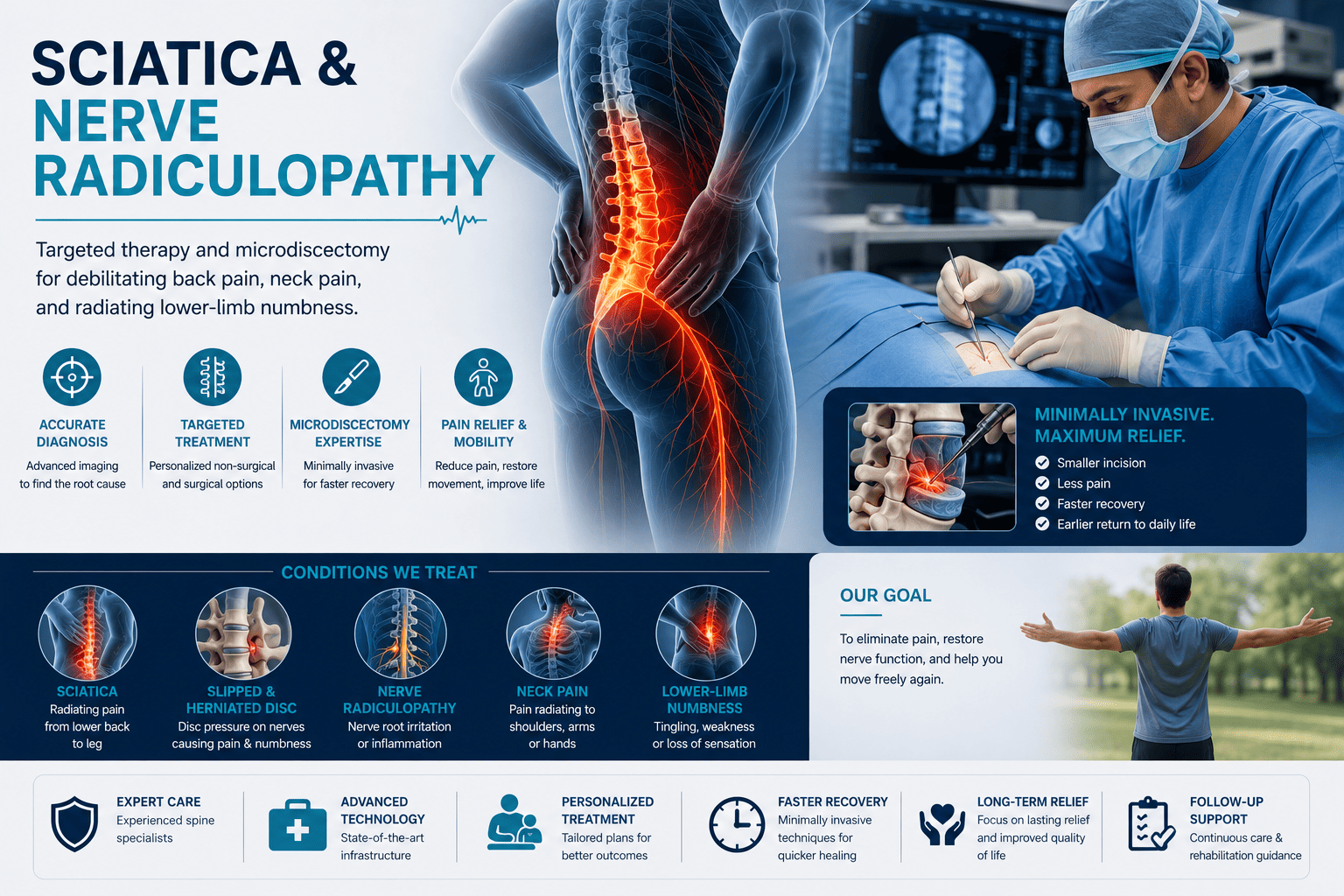
Understanding spinal nerve compression and disc-related disorders
Symptoms usually affect the lower back, neck, legs, or arms depending on the compressed nerve.
Sharp pain traveling from the lower back into the buttocks and legs.
Tingling or numbness in legs, feet, arms, or hands caused by nerve compression.
Persistent lower back pain affecting movement and posture.
Pain and stiffness in the neck that may radiate into the shoulders or arms.
Weakness in limbs causing difficulty walking or lifting objects.
Burning or electric shock-like pain along the affected nerve pathway.
Imaging, procedure stages, patient rehabilitation milestones, and advanced treatment visuals.
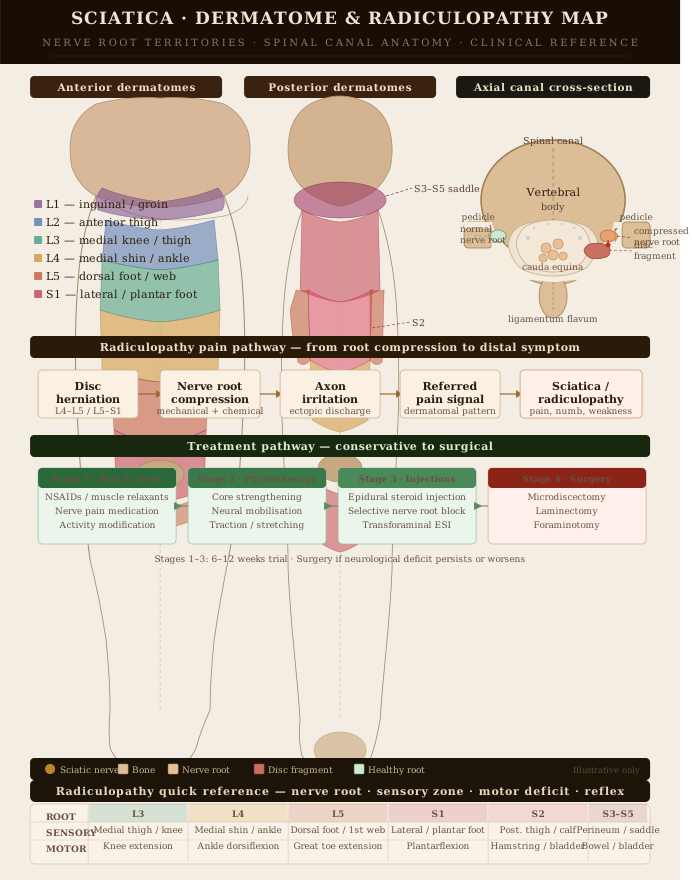
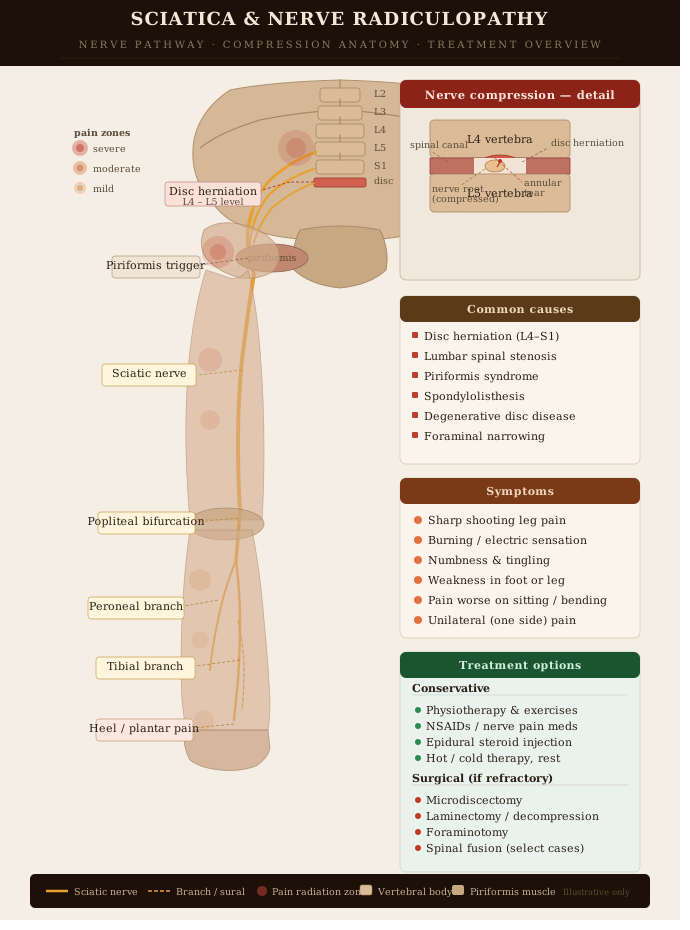
Treatment focuses on relieving nerve compression, reducing pain, restoring movement, and preventing long-term spinal complications.
Recovery depends on the severity of nerve compression and the treatment method used. Rehabilitation and posture correction improve long-term spinal health and mobility.
Initial therapy and medication help reduce nerve inflammation and pain.
Physiotherapy improves flexibility, posture, and muscle strength.
Most patients gradually return to daily activities with reduced pain.