Skip to Main Content
Advanced Neurology & Neurosurgery

Epilepsy & Seizures

Comprehensive clinical assessment, medical management, and long-term care plans for chronic epilepsy syndromics.

92% seizure control success
300+ epilepsy cases treated
24/7 neurological monitoring
Medical Overview

What Are Epilepsy & Seizures?

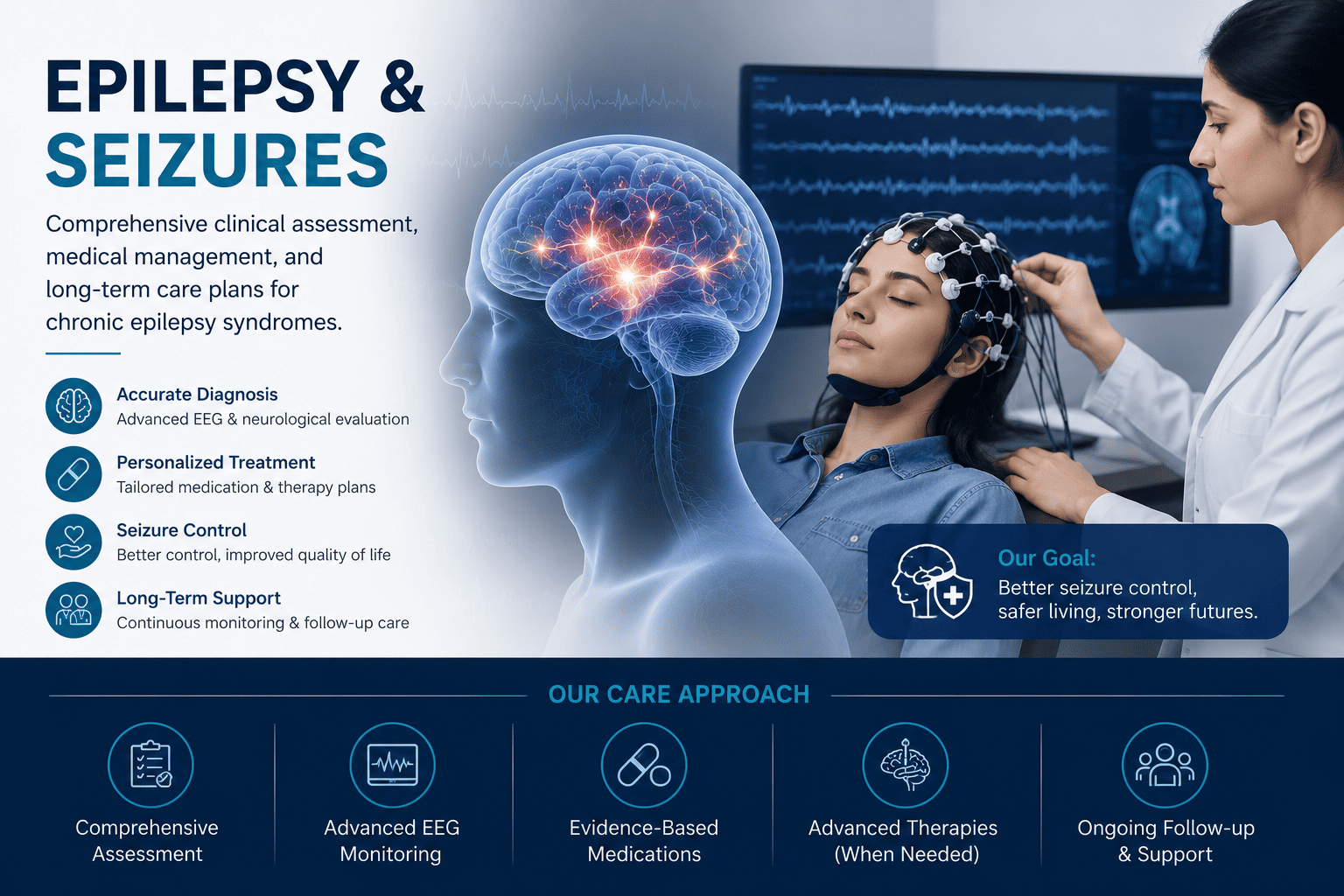
Epilepsy is a neurological disorder that causes repeated seizures due to abnormal electrical activity in the brain. Seizures may affect movement, awareness, sensation, memory, or behavior and require long-term neurological care and monitoring.
Comprehensive neurological care and long-term seizure management help improve safety, independence, and quality of life.
What Are Epilepsy & Seizures?
Risk Factors
  • Brain Injury Previous head injuries may increase seizure risk.
  • Genetic Factors Certain inherited neurological conditions may contribute to epilepsy.
  • Brain Infections Neurological infections can affect brain electrical activity.
  • Stroke History Stroke-related brain damage may lead to seizure disorders.
Understanding the Condition

Causes of Epilepsy & Seizures

Understanding seizure disorders and neurological triggers

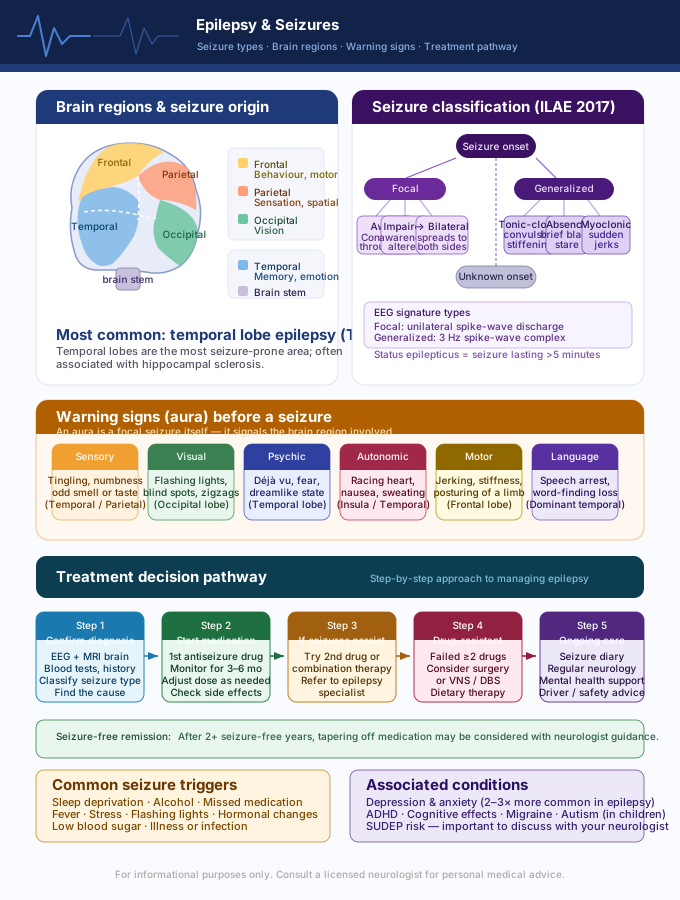
Epilepsy and seizures may occur due to brain injuries, infections, stroke, genetic conditions, developmental disorders, tumors, or unknown neurological causes. Certain triggers such as stress, lack of sleep, and flashing lights may increase seizure risk.
Signs to Watch For

Symptoms of Epilepsy & Seizures

Symptoms vary depending on the type of seizure and affected brain region.

Seizure Episodes

Sudden uncontrolled electrical disturbances causing body movements or behavioral changes.

Loss of Consciousness

Temporary loss of awareness or responsiveness during seizure activity.

Muscle Jerking

Uncontrolled jerking or stiffness in arms, legs, or body muscles.

Confusion

Temporary confusion, memory loss, or difficulty understanding surroundings.

Staring Spells

Brief periods of blank staring or unresponsiveness.

Sensory Disturbances

Strange sensations, dizziness, fear, or unusual smells before seizures.

Personalised Care Pathways

Treatment Options for Epilepsy & Seizures

Treatment focuses on controlling seizures, identifying triggers, improving neurological stability, and supporting long-term quality of life.

01
First Step

Neurological Evaluation

Detailed neurological assessment and EEG monitoring help diagnose seizure disorders accurately.

02
Non-Surgical

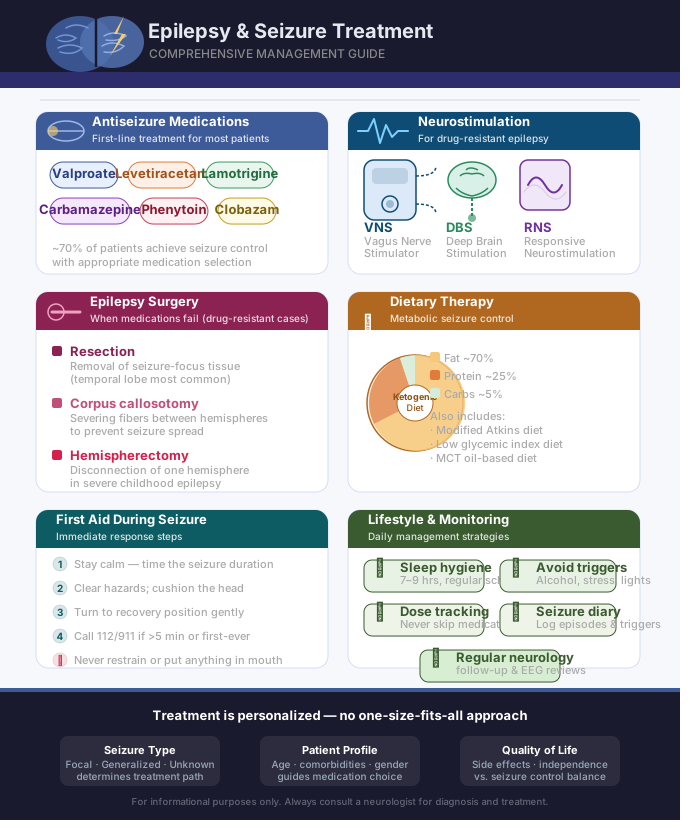
Anti-Epileptic Medication

Specialized medications help reduce seizure frequency and improve neurological control.

03
Long-Term Care

Lifestyle Management

Sleep regulation, stress reduction, and trigger management help improve seizure control.

01
Emergency

Emergency Seizure Medication

Rapid-acting medications are used during severe or prolonged seizure episodes.

02
Advanced

Advanced Drug Therapy

Specialized neurological medication protocols improve seizure management in chronic epilepsy.

01
Advanced

Epilepsy Surgery

Surgical procedures help control seizures in selected drug-resistant epilepsy patients.

02
Specialized

Vagus Nerve Stimulation

Electrical stimulation therapy helps reduce seizure frequency in chronic epilepsy.

03
Gold Standard

Neurostimulation Procedures

Advanced neurostimulation devices help improve seizure control and neurological function.

Your Healing Journey

Recovery & Long-Term Epilepsy Care

Long-term epilepsy care focuses on seizure control, medication monitoring, lifestyle management, and neurological follow-up to improve daily safety and quality of life.

Week 1

Initial Stabilization

Neurological evaluation and medication adjustments help stabilize seizure activity.

Week 3

Monitoring Phase

Regular neurological follow-up and seizure tracking improve long-term management.

Week 6

Lifestyle Recovery

Patients gradually return to normal activities with proper seizure precautions.

Common Questions

Frequently Asked Questions

Yes, many epilepsy patients achieve effective seizure control with proper anti-epileptic medications.
Common seizure triggers include stress, lack of sleep, flashing lights, alcohol, and missed medications.
Advanced epilepsy surgery is considered safe and may help selected patients with drug-resistant seizures.
WhatsApp Call